
The Silver Countdown
Europe's Industrial Suicide by Spreadsheet

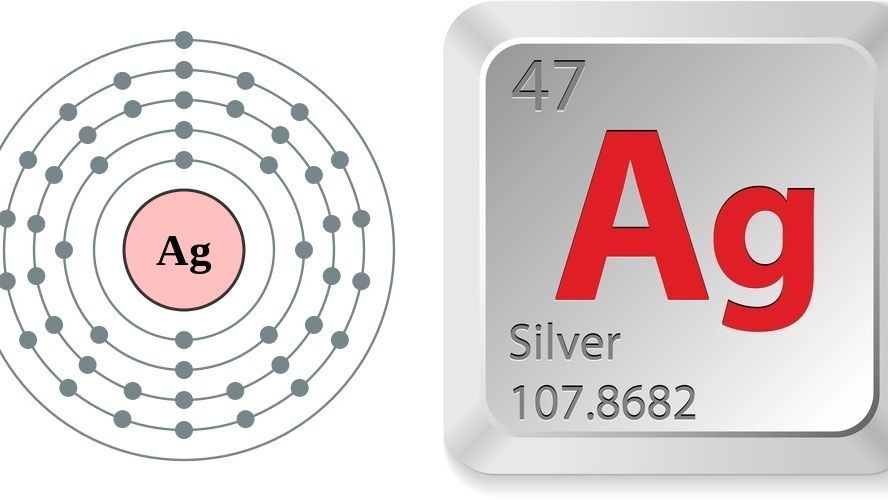
How the continent that invented modern metallurgy became a spectator in the metal that powers the futureSilver isn’t just a precious metal. It’s the metal that powers the future: the fastest conductor on Earth, with 5–7% higher conductivity than copper. The electrons move faster. The signals transmit cleaner. The efficiency drives everything from EV acceleration to AI computation.And in a world where speed is power, silver is the ultimate energy metal.As the world wakes up to silver’s renewed importance as both a monetary and industrial metal, the signal is often drowned out by noise. Failing Western paper markets, shifting price discovery toward China and India, a weakening US dollar, and a Federal Reserve trapped between unsustainable debt and entrenched inflation create constant macro distraction. Layer on top of rising geopolitical tension, visible corruption in Washington at both congressional and executive levels, systemic banking risk, and reckless fiscal policy, and many silver stackers find themselves ricocheting from crisis headline to crisis headline. The purpose of this article is simply to offer a calm, Wikipedia-style primer to keep us anchored in silver’s fundamentals.
What is Silver?
Silver (/ˈsɪlvər/) is a chemical element with the symbol Ag (from Latin argentum) and atomic number 47. A soft, white, lustrous transition metal, it has the highest electrical conductivity of any element and the highest thermal conductivity of any metal. Silver occurs in native form and in minerals such as argentite and chlorargyrite, and most modern production is obtained as a by-product of copper, gold, lead, and zinc mining.Silver is found in the Earth’s crust as native metal, in sulfide and halide minerals such as argentite (Ag₂S), horn silver or chlorargyrite (AgCl), and pyrargyrite (Ag₃SbS₃). It commonly occurs associated with ores of gold, copper, copper-nickel, lead, and lead-zinc.Major silver ores and deposits are actively mined today in Mexico, China, Peru, Chile, Australia, Poland, and the United States, all of which rank among the world’s top silver-producing countries. Mexico and Peru have been central to global silver supply since the 16th century, when Spanish colonial mining turned their Andean and Mexican districts into dominant producers, a role they still hold. Before the rise of New World mining, key silver centers included Anatolia (ancient Lydia), the Laurium district in Greece, and later the Iberian Peninsula under Rome, alongside other important but more localized workings across parts of Africa, the Near East, Persia, and China.Silver is also recovered during electrolytic refining of copper and by the Parkes process applied to lead bullion that contains small amounts of silver.Commercial fine silver is typically at least 99.9% pure, and purities exceeding 99.999% are industrially available. In the early 21st century, Peru and Mexico each accounted for a significant share of world mine output, with individual countries producing on the order of a sixth of global supply in some years.
China controls around 60–70% of the world’s refined silver supply through its sprawling refining infrastructure. Nearly all major industrial uses of silver depend on high-purity metal, typically .999 fine. Bullion coins and rounds such as the Britannia, Maple Leaf, American Eagle, Philharmonic, and many Sunshine Mint products are refined to this extremely pure state, with some like the Maple Leaf reaching .9999 fineness. While laboratories can push purity even higher, there is no practical improvement in everyday industrial or monetary use beyond these levels.This is the key distinction: unlike oil, which must be broken down into products like gasoline or diesel, that one-ounce silver round in your pocket is already in its final, functional form.This point cannot be overstated. Unlike oil, which must be refined into various products such as gasoline, the one ounce silver round in your pocket is already in its perfect, finished form.
Silver in Military Systems
Silver batteries used in military systems, including torpedo power packs, employ silver-zinc and related chemistries to achieve very high energy density, reliability, and discharge rates in fully submerged environments where lithium systems are less suitable. Some of the largest undersea batteries can incorporate on the order of many thousands of troy ounces of silver per unit, making them among the most silver intensive discrete devices.
Silver as a Driver of New Technologies
Robotics
Robotics systems use silver in precision actuators, sensors, high-flex interconnects, and power distribution buses, where low resistance and efficient heat removal are critical. Silver filled greases, solders, and metallisation layers also help maintain stable performance over millions of motion cycles in industrial and collaborative robots.
AI Hardware
AI hardware, from edge devices to large data-centre accelerators, relies on dense circuit boards and high-current power delivery networks in which silver containing pastes, terminations, and connectors reduce resistive losses and improve heat spreading. This helps support the high current densities, switching speeds, and thermal loads typical of AI workloads and advanced packaging technologies.
5G Infrastructure
In 5G infrastructure, silver is used in RF connectors, high frequency antenna feed structures, and low-loss conductors where minimising insertion loss and preserving signal integrity at gigahertz and millimetre-wave frequencies are essential. Silver plated components and silver pastes contribute to efficient operation of active antenna arrays, small cells, and related radio equipment.
Next-Generation Energy Storage
Solid-state batteries and other next generation energy storage concepts explore silver containing materials as current collectors, conductive interlayers, and specialised electrode components. By improving interfacial contact and electronic conductivity, silver can help address resistance at interfaces, an important factor in the performance and cycle life of thin-film and high power cells.
High-End Electronics
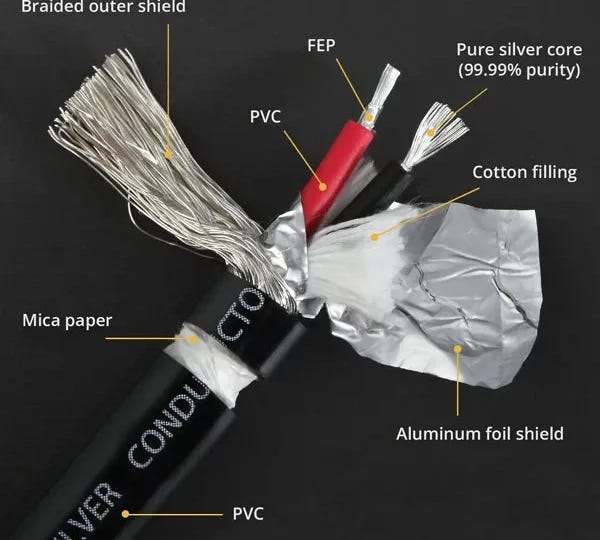
High end electronics, including audio, RF, and precision instrumentation, make use of silver or silver plated conductors, connectors, and relay contacts to exploit silver’s superior conductivity and low contact resistance. In combination with its high thermal conductivity, these properties support low noise operation, tight tolerances, and effective thermal management in demanding circuits.
Solar Energy
In solar energy, silver is a key material in crystalline silicon photovoltaic cells, where screen-printed silver pastes form the fine front side gridlines that collect and conduct current. Its excellent conductivity and good reflectivity help reduce resistive losses and, in some cell designs, improve optical management, making silver one of the most valuable materials per watt of PV capacity.
Nuclear Energy
Nuclear energy applications use silver in control and safety systems, notably in silver indium cadmium alloy control rods deployed in some reactor designs to absorb neutrons and regulate the fission process. In these roles silver contributes mechanical strength and suitable behaviour under intense radiation and elevated temperatures over long operating lifetimes.
Silver’s Seven Critical Properties
Ductility: Silver’s ability to be drawn into very fine wire without breaking enables ultra-thin conductors in high frequency cables, precision coils, and micro interconnects in advanced electronics and sensors.
Malleability: Its capacity to be hammered or rolled into thin sheets without cracking supports applications such as contact foils, bonding ribbons, and thin metallisation layers in semiconductor packages and power electronics.
Reflectivity: Silver’s high reflectivity means it efficiently reflects visible and infrared light, making it valuable for precision mirrors, solar thermal concentrators, reflective coatings in architectural glass, and optical components in instruments and lasers.
Thermal properties: Its exceptional thermal conductivity the highest among metals enables rapid heat spreading in power electronics, LED modules, RF amplifiers, and high performance computing hardware, where silver layers, pastes, and interfaces dissipate heat away from hot spots.
Electrical conductivity: Its superior electrical conductivity (the highest of all metals) allows current to flow with minimal resistance, so it is used in high reliability contacts, busbars, RF connectors, printed conductors in solar cells, and premium signal paths in high end electronics.
Antimicrobial character: Silver ions disrupt microbial cell membranes and metabolic processes, leading to its use in medical dressings, catheter coatings, water purification systems, food contact surfaces, and antimicrobial textiles.
Energy density: In batteries, silver contributes to high energy density through electrochemical couples such as silver-zinc, allowing compact cells with high specific energy for military torpedoes, aerospace power systems, and specialised high drain portable equipment.
Silver as a Precious Metal
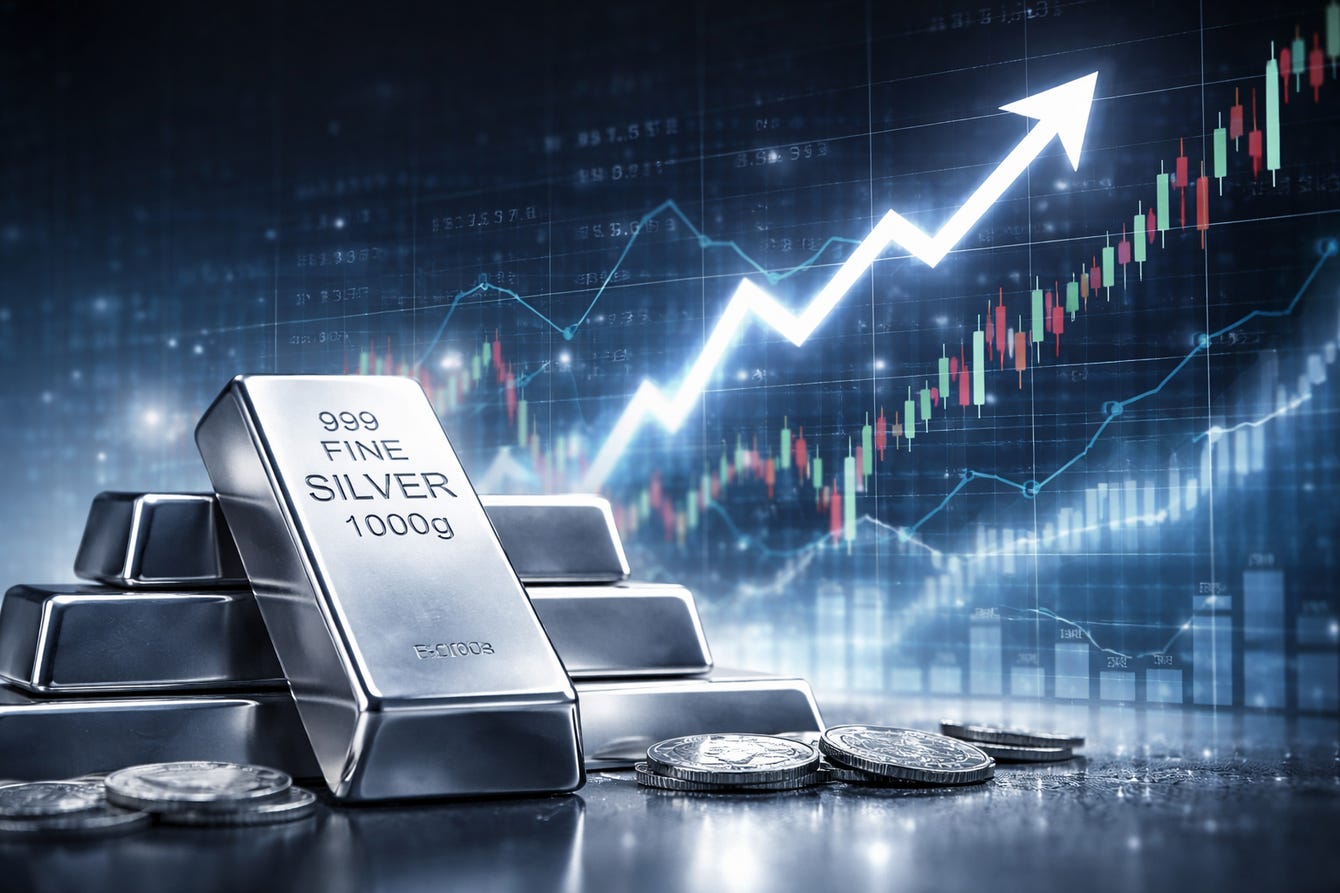
Silver is one of the best-known precious metals and has long been used to make high-value objects that reflect the wealth and status of their owners, including jewellery, religious artefacts, and ceremonial plate. Jewellery and traditional silverware are commonly made from sterling silver, an alloy of 92.5% silver and 7.5% copper that is harder than pure silver and has a lower melting point (about 893 °C), making it better suited to durable, worked items.
Europe’s Industrial Obituary: Written in Silver
The once-diverse European industries have not been competitive for a long time. Let that sink in. The continent that gave the world the Industrial Revolution, precision engineering, and advanced metallurgy now watches from the sidelines as Asia led by China builds the technologies that will define the 21st century.
The lack of development of new technologies related to silver as a driving resource puts the countries of this community in a corner where a bad student must have a special bench.
It’s almost poetic. Europe invented modern chemistry, developed semiconductor physics, pioneered solar cell technology and then sat back and let China control 60–70% of the world’s refined silver supply. The metal that powers AI, 5G, robotics, advanced batteries, and solar energy? China refines it. China integrates it. China dominates the supply chain from mine to finished circuit board.
Meanwhile, European policymakers pen white papers about “strategic autonomy” and “reshoring critical industries” while their manufacturing base continues its slow motion collapse. The bureaucratic theatre is impressive commissioning studies, forming working groups, announcing “green transition” initiatives all while lacking the industrial capacity to actually execute at scale.
Asian countries, led by China, are gaining momentum, and have already taken it to such an extent that the others are only looking at the dust.
Here’s the uncomfortable truth: while Europe debates ESG compliance frameworks and six-month environmental impact assessments, China builds gigafactories, refines critical metals, and vertically integrates supply chains. Speed is power. Industrial capacity is sovereignty. And Europe has chosen regulatory sophistication over industrial reality.
The sarcasm practically writes itself: Europe will have the most beautifully documented, thoroughly assessed, comprehensively regulated industrial decline in human history. Future historians will marvel at the meticulous record keeping as the continent deindustrialized itself through committee.
Thoughts about a new war economy lead only to economic ruin; some are already slowly sinking like the Titanic.
And now comes the most dangerous delusion: the fantasy that Europe can rebuild industrial capacity through “war economy” mobilization without the underlying industrial base, skilled workforce, or access to critical materials. Germany once the manufacturing heart of Europe can barely keep its automotive industry competitive. The UK shuttered its last major steel plants. France’s nuclear industry, once the pride of the continent, struggles with cost overruns and delays.
Mobilizing what, exactly? Consultant presentations? Regulatory frameworks? Sustainability reports?
The Titanic metaphor is generous. At least the Titanic was state of the art when it launched. Europe’s industrial base is more like a museum piece that policymakers keep insisting is seaworthy while water floods the lower decks and the captain’s busy rearranging deck chairs according to the latest wellness guidelines.
This is the reality: China controls the refined silver. China builds the solar panels (using that silver). China manufactures the batteries (using that silver). China deploys the 5G infrastructure (using that silver). China develops the AI accelerators (using that silver). Europe writes position papers about the importance of silver to the green transition.
The choice is stark and the window is closing: either rebuild actual industrial capacitymining, refining, manufacturing, vertical integration or accept permanent technological vassalage to those who did. There is no third option. No amount of regulatory sophistication, diplomatic posturing, or “strategic partnerships” can substitute for the ability to make things.
Silver is not just a precious metal. It’s a mirror and right now it’s reflecting Europe’s industrial funeral.
The countdown has begun. The question is whether European leadership will notice before the timer runs out, or whether they’ll be too busy drafting the next five-year plan to hear the alarm.
About the Author
Darko Brlečić brings 30 years of hands on experience in microelectronics, consumer electronics, and semiconductor technology. His career spans the evolution from discrete components to advanced integrated systems, giving him a front row seat to the industrial transformations and failures that shape today’s technology landscape. He has watched Europe’s industrial decline not from a policy office, but from the factory floor and engineering bench where consequences are measured in lost capacity, not lost reports.